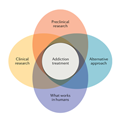
Reviews To Read – October 2020. Recent advances in animal addiction models have emphasized translational challenges. In this Review, Venniro and colleagues introduce a reverse translational approach that may provide an ecologically relevant platform from which to discover new circuits, test new medications and improve translation.
News Main
Rajtarun Madangopal and Marco Venniro Awarded Brain & Behavior Research Foundation Young Investigator NARSAD Grants

The Brain & Behavior Research Foundation has awarded 2020 Young Investigator Grants to NIDA IRP staff members Rajtarun Madangopal and Marco Venniro. BBRF Young Investigator Grants provide each scientist with up to $35,000 per year for two years totaling $70,000 to enable promising investigators to either extend research fellowship training or begin careers as independent… [Read More]
Modafinil potentiates cocaine self-administration by a dopamine-independent mechanism: possible involvement of gap junctions

Featured Paper of the Month – October 2020
Published in Neuropsychopharmacology by Mereu, Maddalena; Hiranita, Takato; Jordan, Chloe J; Chun, Lauren E; Lopez, Jessica P; Coggiano, Mark A; Quarterman, Juliana C; Bi, Guo-Hua; Keighron, Jacqueline D; Xi, Zheng-Xiong; Newman, Amy Hauck; Katz, Jonathan L; Tanda, Gianluigi
Modafinil and methylphenidate are clinically available medications that inhibit the reuptake of dopamine in neurons, a common mechanism with psychostimulants like cocaine. We investigated the reinforcing actions of modafinil or methylphenidate alone and in combination with cocaine, in rats. While rats did not self-administer modafinil, suggesting low abuse liability, methylphenidate was self-administered similarly to cocaine. However, while both drugs potentiated cocaine’s reinforcing effects, only methylphenidate potentiated the elevated dopamine levels produced by cocaine…
NIDA IRP Staff Members Honored at 2020 NIH Director’s Awards

NIH Director’s Award: Yavin Shaham, NIDA For the development of novel animal models that have led to a paradigm shift in research on behavior and brain mechanisms of drug addiction. Ruth Kirchstein Mentoring Award: Marisela Morales, NIDA For exemplary performance while demonstrating significant leadership, skill, and ability in serving as a mentor. NIDA Staff members… [Read More]
Ayesha Sengupta awarded Women in Learning Research Grant

The Women in Learning Awards Committee has selected Ayesha Sengupta as the recipient of the 2020 “Where there’s a WIL there’s a way” Research Grant. This is the first award of its kind from WIL. It was designed to honor one outstanding yet underrepresented graduate student or post-doctoral fellow in the field of Learning &… [Read More]
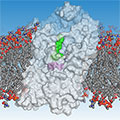
The mechanism of a high-affinity allosteric inhibitor of the serotonin transporter
Featured Paper of the Month – September 2020
Published in Nature Communications by Plenge, Per; Abramyan, Ara M; Sørensen, Gunnar; Mørk, Arne; Weikop, Pia; Gether, Ulrik; Bang-Andersen, Benny; Shi, Lei; Loland, Claus J
The serotonin transporter (SERT) terminates serotonin signaling by rapid presynaptic reuptake. SERT activity is modulated by antidepressants, e.g., S-citalopram and imipramine, to alleviate symptoms of depression and anxiety. SERT crystal structures reveal two S-citalopram binding pockets in the central binding (S1) site and the extracellular vestibule (S2 site). In this study, our combined in vitro and in silico analysis indicates that the bound S-citalopram or imipramine in S1 is allosterically coupled to the ligand binding to S2 through altering protein conformations…
Fentanyl vapor self-administration model in mice to study opioid addiction

Hot Off the Press – August 27 , 2020. This paper describes a new non-invasive model of opioid addiction in mice that is based on fentanyl vapor self-administration. This model allows the study of limited and prolonged drug intake, abstinence, and relapse to drug seeking. Compared to current intravenous models, the new model is more… [Read More]
Role of Projections between Piriform Cortex and Orbitofrontal Cortex in Relapse to Fentanyl Seeking after Palatable Food Choice-Induced Voluntary Abstinence

Featured Paper of the Month – August 2020
Published in Journal of Neuroscience by Reiner, David J; Lofaro, Olivia M; Applebey, Sarah V; Korah, Hannah; Venniro, Marco; Cifani, Carlo; Bossert, Jennifer M; Shaham, Yavin
Fentanyl is a major contributor to the opioid overdose crisis, but there are few preclinical studies of fentanyl relapse. These studies have used experimenter-imposed extinction or forced abstinence procedures. In humans, however, abstinence is often voluntary, with drug available in the drug environment but forgone in favor of nondrug alternative reinforcers. We recently developed a rat model of drug relapse after palatable food choice-induced voluntary abstinence. Here, we used classical pharmacology, immunohistochemistry, and retrograde tracing to demonstrate a critical role of the piriform and orbitofrontal cortices in relapse to fentanyl seeking after voluntary abstinence…
Dr. Eliot Gardner receives the Lifetime Achievement Award from the International Cannabinoid Research Society.

NIDA Investigator Dr. Eliot Gardner has been awarded the prestigious Lifetime Achievement Award from the International Cannabinoid Research Society (ICRS). The ICRS is a non-political, non-religious organization dedicated to scientific research in all fields of the cannabinoids, ranging from biochemical, chemical and physiological studies of the endogenous cannabinoid system to studies of the abuse potential… [Read More]
Converging structural and functional evidence for a rat salience network
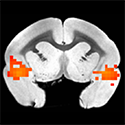
Hot Off the Press – July 17 , 2020. The human salience network (SN) detects relevant stimuli to guide behavior and is implicated in neuropsychiatric diseases. In this study, we identified a functionally and structurally connected rat SN sharing spatial similarity with humans. We further demonstrated the functional implications of this network with conditioned heroin… [Read More]
