




On Thursday, May 14, 2026, the NIDA IRP Clinical Program welcomed representatives from the Office of the Lieutenant Governor. Aruna Miller and her staff received a tour of our facilities and learned about the cutting edge research we are conducting in the field of addiction medicine.

Hot Off the Press

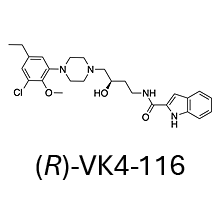
A µ-opioid receptor superagonist analgesic with minimal adverse effects
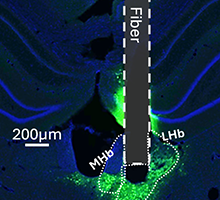
Hot Off the Press – September 9, 2026 Published in Nature by Juan Gomez and Michael Michaelides, et al. of the NIDA IRP Biobehavioral Imaging and Molecular Neuropsychopharmacology Section. Summary Developing safe and effective pain medications is an ongoing challenge for human health. Agonists for the µ-opioid receptor (MOR) are essential pain medications, but their… [Read More]
Reviews To Read
Prospects of GLP-1 Therapies for Addiction and Mental Health Comorbidities-Quo Vadis?: A Review
Reviews To Read – February 2026 Published in JAMA Psychiatry by Mehdi Farokhnia and Lorenzo Leggio of the NIDA IRP Clinical Psychoneuroendocrinology and Neuropsychopharmacology Section. New medicines that mimic a natural gut hormone called GLP-1 have already changed how clinicians treat type 2 diabetes, obesity and related cardiometabolic consequences. Because some of the same brain… [Read More]
Featured Papers

Deviation in development of dorsal association tracts during preadolescence links to concurrent and future cognitive performance and transdiagnostic psychopathology.
Featured Paper of the Month – September 2026 Published in Nature Communications by Danni Wang and Yihong Yang, et al. of the NIDA IRP Magnetic Resonance Imaging and Spectroscopy Section. Researchers analyzed brain imaging data from 10,000 children and found that children whose white matter pathways involved in attention, language, and higher-level cognition appeared more advanced development for their age generally had stronger cognitive abilities and fewer attention and behavioral problems.