The Winter Conference on Brain Research (WCBR) has presented Eliot Gardner, Ph.D. of the NIDA IRP with the Pioneer Award for his lifetime of work in the field of neuropsychopharmacology. Dr. Gardner has attended WCBR for more than 50 years , participating in countless panels and workshops. He has also brought many of his students… [Read More]
News Main
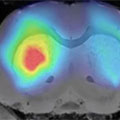
High-potency ligands for DREADD imaging and activation in rodents and monkeys.
Featured Paper of the Month – February 2020
Published in Nature Communications by Bonaventura, Jordi; Eldridge, Mark A G; Hu, Feng; Gomez, Juan L; Sanchez-Soto, Marta; Abramyan, Ara M; Lam, Sherry; Boehm, Matthew A; Ruiz, Christina; Farrell, Mitchell R; Moreno, Andrea; Faress, Islam Mustafa Galal; Andersen, Niels; Lin, John Y; Moaddel, Ruin; Morris, Patrick J; Shi, Lei; Sibley, David R; Mahler, Stephen V; Nabavi, Sadegh; Pomper, Martin G; Bonci, Antonello; Horti, Andrew G; Richmond, Barry J; Michaelides, Michael
Designer Receptors Exclusively Activated by Designer Drugs (DREADDs) are a popular chemogenetic technology for manipulation of neuronal activity in uninstrumented awake animals with potential for human applications as well. The prototypical DREADD agonist clozapine N-oxide (CNO) lacks brain entry and converts to clozapine, making it difficult to apply in basic and translational applications…
Orbitofrontal cortex is selectively activated in a primate model of attentional bias to cocaine cues.
Featured Paper of the Month – January 2020
Published in Neuropsychopharmacology by Baeg, Eunha; Jedema, Hank P; Bradberry, Charles W
Drug-associated cues can intrude upon thinking, making relapse more likely. A measure of how strongly cues engage cognitive resources is called attentional bias. This is reflected in slightly longer response times on trials on a stimulus response task when drug cues are present compared to non-drug cues. In both cases, the cue is an irrelevant distractor that should just be ignored. Attentional bias is clinically important, because, across individuals, it correlates with extent of current use, and risk of relapse among those attempting abstinence…
Operant Social Reward Decreases Incubation of Heroin Craving in Male and Female Rats.
Hot Off the Press – December 18 , 2019. We recently developed a rat model of relapse after voluntary abstinence from methamphetamine self-administration that is based on behavioral treatments in humans with substance use problems. In the present study, we extend this work to heroin self-administration, demonstrating that when rats are given the opportunity to… [Read More]
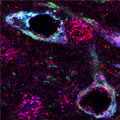
The Ventral Tegmental Area has calbindin neurons with the capability to co-release glutamate and dopamine into the nucleus accumbens.
Featured Paper of the Month – December 2019
Published in European Journal of Neuroscience by Mongia, Smriti; Yamaguchi, Tsuyoshi; Liu, Bing; Zhang, Shiliang; Wang, Huiling; Morales, Marisela
Unraveling the mystery of the glutamate-dopamine connection
The ventral tegmental area (VTA) is a brain structure that participates in the rewarding effects of drug use, but the role of specific neurons within the VTA is unclear. Scientists at NIDA’s Intramural Research Program conducted a set of studies to better understand the function of glutamate neurons in this addiction-relevant brain region. Glutamate is an excitatory neurotransmitter that plays an important role in brain development, normal brain processes, and pathological conditions like addiction…
Activation of a lateral hypothalamic-ventral tegmental circuit gates motivation
Featured Paper of the Month – November 2019
Published in PLoS One by Schiffino, Felipe L; Siemian, Justin N; Petrella, Michele; Laing, Brenton T; Sarsfield, Sarah; Borja, Cara B; Gajendiran, Anjali; Zuccoli, Maria Laura; Aponte, Yeka
Motivated states such as food-seeking and consumption are essential for survival. A brain region called the lateral hypothalamus (LH) plays a fundamental role in regulating feeding and reward-related behaviors, but the contributions of specific neuronal subpopulations in the LH have not been thoroughly characterized. Here we examine how lateral hypothalamic leptin receptor-expressing (LHLEPR) neurons, a subset of GABAergic cells, regulate motivation in mice. We trained mice to lever-press for food pellets on a progressive ratio schedule, a model commonly used to assess motivation to obtain a reinforcer…
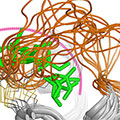
Habenular and striatal activity during performance feedback are differentially linked with state-like and trait-like aspects of tobacco use disorder.
Hot Off the Press – October 28, 2019. Approximately 1.1 billion people smoke cigarettes worldwide. More than half of these are expected to die of smoking-related diseases. According to the US Centers for Disease Control: most smokers (68%) want to quit; about half (54%) try to quit each year; yet very few (about 7%) do… [Read More]
Intrinsic Insular-Frontal Networks Predict Future Nicotine Dependence Severity.
Featured Paper of the Month – October 2019
Published in The Journal of Neuroscience by Hsu, Li-Ming; Keeley, Robin J; Liang, Xia; Brynildsen, Julia K; Lu, Hanbing; Yang, Yihong; Stein, Elliot A
Smoking remains a major public health burden, with approximately 20% of the world’s population engaging in regular smoking. Given the high relapse rate among smokers who enter treatments programs, early identification of vulnerable individuals, before the conversion from casual experimentation to regular smoking and addiction, is an important milestone to understand, prevent and potentially minimize nicotine dependence. Using a rodent model of nicotine dependence, we developed a quantitative predictor of subsequent nicotine dependence severity using graph theory-based analyses of fMRI BOLD resting state data collected at baseline, prior to any drug experience…
Eliot Gardner Presented with Lifetime Achievement Award
Eliot Gardner received the Lifetime Achievement Award from the International Drug Abuse Research Society at its most recent meeting in Casablanca, Morocco. The award was presented to Dr. Gardner by the Prime Minister of Morocco, Saadeddine Othmani. Dr. Gardner was honored for his lifetime of groundbreaking research in the field of Neuropsychopharmacology at The NIDA… [Read More]
Altered corticolimbic control of the nucleus accumbens by chronic Δ9-Tetrahydrocannabinol Exposure
Hot Off the Press – September 3, 2019. The expanding legalization of recreational and medical marijuana has increased its availability, and stronger strains of cannabis containing much higher levels of ∆9-tetrahydrocannabinol (THC), the primary psychoactive constituent, are now widely used. Although the effects of marijuana on the brain are often assumed to be mild, there… [Read More]