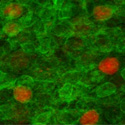
Reviews To Read – September 2022. Published in Nature Metabolism and coauthored by Ana Pamela Miranda Tapia and Yeka Aponte of the Neuronal Circuits and Behavior Section (NIDA IRP) and Ivan C. Alcantara and Michael J. Krashes of the Section on Motivational Processes Underlying Appetite (NIDDK IRP). For decades, the prevalence of obesity has surged due… [Read More]
News Main
Technology Development Initiative – Paper of the Month – September 2022
SMART: An Open-Source Extension of WholeBrain for Intact Mouse Brain Registration and Segmentation. eNeuro.
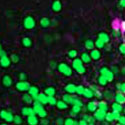
Jin et al. presents an optimized protocol for Fos staining, a marker of neuronal activation, in a cleared mouse brain and provide an open-source R package called SMART (Semi-Manual Alignment to Reference Templates) as an extension to the Wholebrain pipeline (PMID: 29203898). SMART is designed to make whole-brain activity mapping more accessible to researchers looking to implement the technique and analysis into their research program. [Read More]
Target deconvolution studies of (2R,6R)-hydroxynorketamine: an elusive search
Featured Paper of the Month – September 2022
Published in Molecular Psychiatry by Jordi Bonaventura and Michael Michaelides, et al. of the NIDA IRP Biobehavioral Imaging and Molecular Neuropsychopharmacology Unit.
The use of racemic ketamine and the FDA approval of (S)-ketamine are promising developments for the treatment of depression. Nevertheless, racemic ketamine and (S)-ketamine are controlled substances with known abuse potential and their use is associated with undesirable side effects. For these reasons, research efforts have focused on identifying alternatives. One candidate is (2R,6R)-hydroxynorketamine ((2R,6R)-HNK), a ketamine metabolite that in animal studies lacks the dissociative and abuse properties of ketamine while retaining its antidepressant-like behavioral efficacy…
Synaptic-like axo-axonal transmission from striatal cholinergic interneurons onto dopaminergic fibers
Hot Off the Press – August 15, 2022 Summary Communication between brain cells (neurons) generally involves the unidirectional flow of information. Input from upstream cells arrives onto the dendrites, gets processed in the cell body where it is converted into a rapid electrical wave (action potential) that travels down the axon to trigger the release… [Read More]
Technology Development Initiative – Paper of the Month – August 2022
An integrated wearable microneedle array for the continuous monitoring of multiple biomarkers in interstitial fluid. Nature Biomedical Engineering.
Tehrani et al, describes the development and implementation of a wearable sensor that contains an array of microneedles for real-time monitoring of lactate and glucose or alcohol and glucose from interstitial fluid. This paper highlights the potential for garnering clinical data from individuals with alcohol abuse disorder, liver disease, and metabolic diseases. [Read More]
Elevation of Extracellular Glutamate by Blockade of Astrocyte Glutamate Transporters Inhibits Cocaine Reinforcement in Rats via a NMDA-GluN2B Receptor Mechanism
Featured Paper of the Month – August 2022
Published in The Journal of Neuroscience by Hong-Ju Yang, Briana J Hempel, and Zheng-Xiong Xi, et al. of the NIDA IRP Addiction Biology Unit.
It is well known that glutamate plays an important role in relapse to drug seeking. However, the role of glutamate in drug reward is unclear. In this report, we found that elevating extracellular glutamate level in the nucleus accumbens (NAc) by TFB-TBOA, a selective astrocyte glutamate transporter inhibitor, dose-dependently inhibits cocaine self-administration and brain-stimulation reward. Mechanistic assays indicate that prolonged cocaine self-administration selectively upregulates NMDA-GluN2B receptor subtype expression in striatal dopaminoceptive neurons…
Preferential Gs protein coupling of the galanin Gal1 receptor in the µ-opioid-Gal1 receptor heterotetramer
Hot Off the Press – July 8, 2022 Published in Pharmacological Research by Paulo De Oliveira, Ph.D. and Sergi Ferré, M.D., Ph.D. of the NIDA-IRP Integrative Neurobiology Section. Summary We recently demonstrated that complexes (heteromers) of μ-opioid receptors (MORs) and receptors for the neuropeptide galanin of the Gal1subtype (Gal1Rs) localized in the brainstem (in the… [Read More]
Technology Development Initiative – Paper of the Month – July 2022
Verification of technical characteristics and performance of VeinViewer Flex, ICEN IN-G090-2 and AccuVein AV400 transillumination devices. Clinica Chimica Acta.
The authors describe a transillumination device that uses near infrared light-emitting diodes to visualize superficial veins and project a real-time image of the veins directly on the surface of the skin. This emerging technology has potential applications both clinically and pre-clinically to improve successful venipuncture for blood sampling and injection of therapeutics in challenging patient populations. [Read More]
Searching for a Signal: Self-Reported Kratom Dose-Effect Relationships Among a Sample of US Adults With Regular Kratom Use Histories
Featured Paper of the Month – July 2022
Published in Frontiers in Pharmacology by Kirsten Smith, Ph.D.; Jeffrey Rogers, BS., B.A.; and David Epstein, Ph.D.; et al. of the NIDA IRP Real-world Assessment, Prediction, and Treatment Unit.
Kratom is a plant increasingly used in the US for the psychoactive properties of the more than four dozen alkaloids it contains. Their mechanisms of action are thought to be opioidergic, adenosinergic, serotoninergic, dopaminergic, and adrenergic. Whole-plant-derived kratom products, almost always taken orally, produce dose-dependent stimulatory and analgesic effects. We know of only one published laboratory study on kratom’s effects in humans; however, surveys have increasingly helped show a complex and changing landscape of kratom use. In this online, nationwide study, we asked 129 people with kratom use histories to report on the effects of their kratom products…
Brain lesions disrupting addiction map to a common human brain circuit.
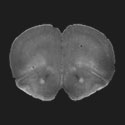
Hot Off the Press – June 15, 2022 Published in Nature Medicine, with contributions by Khaled Moussawi, M.D., Ph.D., Harshwardhan Deshpande, Ph.D., Thomas Ross, Ph.D. and Elliot Stein, Ph.D. of NIDA-IRP. Summary Sometimes regional brain damage (also called a lesion – for example from a stroke) leads to spontaneous remission of addiction – in the… [Read More]