
Featured Paper of the Month – September 2026 Published in Nature Communications by Danni Wang and Yihong Yang, et al. of the NIDA IRP Magnetic Resonance Imaging and Spectroscopy Section. Researchers analyzed brain imaging data from 10,000 children and found that children whose white matter pathways involved in attention, language, and higher-level cognition appeared more advanced development for their age generally had stronger cognitive abilities and fewer attention and behavioral problems.
Featured Paper of the Month
A ketogenic diet reduces hepatic alcohol metabolism and alcohol consumption in rats

Featured Paper of the Month – August 2026
Published in Neuropsychopharmacology by Sophie Elvig, Adrienne McGinn, and Leandro Vendruscolo, et al. of the NIDA/NIAAA Stress and Addiction Neuroscience Unit.
Findings from this study suggest that a ketogenic diet (a high-fat, low-carbohydrate diet) changes the way the body processes alcohol.
Brain CB2 receptor: a new target in medication development for treating opioid use disorder in rodents
Featured Paper of the Month – July 2026
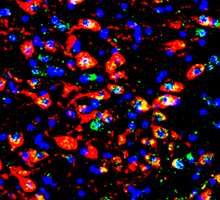
Published in Molecular Psychiatry by Omar Soler-Cedeño and Zheng-Xiong Xi, et al. of the NIDA IRP Addiction Biology Unit.
This study tested a novel compound, MRI-2594, to determine whether it could reduce opioid use and relapse-related behaviors in rats and mice.
Potentiation of fentanyl-induced respiratory depression by alcohol is not fully reversed by naloxone

Featured Paper of the Month – June 2026
Published in JCI Insight by Lyndsay Hastings*, Emma Frye*, Renata Marchette and George Koob of the NIDA IRP Neurobiology of Addiction Section.
In this study, we found that combining fentanyl and alcohol led to reductions in minute ventilation and severe apnea that were not fully reversed by naloxone.
Chronic delivery of buprenorphine during abstinence decreases incubation of heroin seeking and neuronal activation in medial prefrontal cortex and striatum in male and female rats

Featured Paper of the Month – May 2026
Published in JAMA Network Open by Xiang Xiao and Yihong Yang et al. of the NIDA IRP Magnetic Resonance Imaging and Spectroscopy Section.
Buprenorphine is an FDA-approved medication for opioid addiction, but the brain regions underlying its therapeutic effects are unknown. In this study, we tested whether chronic buprenorphine reduces the time-dependent increase (“incubation”) in heroin seeking during abstinence.
Modification of Brain Connectome on Association Between Adverse Childhood Experiences and Development of Mental Disorders in Preadolescence

Featured Paper of the Month – April 2026 Published in JAMA Network Open by Xiang Xiao and Yihong Yang et al. of the NIDA IRP Magnetic Resonance Imaging and Spectroscopy Section. In this study, we addressed the question of whether a brain marker moderates the association between childhood adversity and psychiatric disorders during the transition to adolescence.
Distinct Amygdala Neuronal Populations Control Opioid Use and Withdrawal in Mice.

Featured Paper of the Month – March 2026
Published in Biological Psychiatry by Lucas Silva Tortorelli and Leandro Vendruscolo et al. of the NIDA IRP Stress and Addiction Neuroscience Unit.
We used in situ hybridization to characterize the expression of μ opioid receptor (MOR) (Oprm1), and we used behavioral and molecular approaches to assess the functional role of these CeA neuronal populations in opioid-dependent mice.
Latent Classes of Adverse Childhood Experiences (ACEs) and Adult Substance-use Problems and Psychosocial Outcomes: Complex and Heterogeneous Associations.

Featured Paper of the Month – February 2026
Published in International Journal of Mental Health and Addiction by Emily Herberholz, Rachel Wolchok an David Epstein, et al. of the NIDA IRP Real-world Assessment, Prediction, and Treatment Section.
In this paper, we first showed that we could categorize people by specific patterns/types of ACE exposure, providing a more informative summary than the older approach of just tallying up each person’s total number of types of ACEs. Then we showed that even though ACE exposure can predict later SUD symptoms to a statistically significant degree in people who use alcohol or other drugs, the predictions are too imprecise for case-by-case decision-making
Distinct prelimbic cortex ensembles encode response execution and inhibition.

Featured Paper of the Month – January 2026
Published in PNAS by Rajtarun Madangopal, Ph.D. and Bruce Hope, Ph.D. of the NIDA IRP Neuronal Ensembles in Drug Addiction Section.
In this study, researchers used single-cell calcium imaging to longitudinally track hundreds of brain cells (neurons) in rats across three phases: when they pressed a lever for food rewards (Training), as they learned to stop pressing when the reward was removed (Extinction), and when they resumed pressing after a small, non-contingent reward was reintroduced (Reinstatement). Analyses showed that distinct and non-overlapping populations – called ensembles – were active during Training and Extinction, to support response execution and inhibition, respectively.
A novel atypical DAT inhibitor that inhibits cocaine taking and seeking and itself has low abuse potential in experimental animals.

Featured Paper of the Month – December 2025
Published in Translational Psychiatry by Omar Soler-Cedeño and Zheng-Xiong Xi, M.D., Ph.D. of the NIDA IRP Addiction Biology Unit.
This study evaluated two new compounds in animal models: RDS-04-010, an atypical dopamine transporter (DAT) inhibitor that binds to an inward-facing conformation of DAT, and RDS-03-094, a more typical DAT inhibitor that binds to an outward-facing conformation. Notably, RDS-04-010 reduced cocaine use, lowered motivation to seek cocaine, and prevented relapse-like behavior, while showing no rewarding or addictive effects on its own. These findings highlight RDS-04-010 as a promising treatment candidate.
