
Reviews To Read – November 29, 2018. This commentary on the opioid crisis was written by two NIDA IRP investigators (clinical investigator David Epstein and preclinical investigator Yavin Shaham), along with former Clinical Director Markus Heilig. It challenges misconceptions about the nature of the crisis, and it suggests solutions that are–as the authors say–“probably not… [Read More]
News Main
Volitional social interaction prevents drug addiction in rat models.

Hot Off the Press – November 19, 2018. A new study published in Nature Neuroscience finds that social interactions can have a profound effect on behaviors related to addiction, and on the brain’s response to drug-associated cues. These findings have implications for people with substance use disorders (SUDs), because it suggests that social interaction can… [Read More]
Selective Brain Distribution and Distinctive Synaptic Architecture of Dual Glutamatergic-GABAergic Neurons
Featured Paper of the Month – Novermber 2018
Published in Cell Reports by Root, David H; Zhang, Shiliang; Barker, David J; Miranda-Barrientos, Jorge; Liu, Bing; Wang, Hui-Ling; Morales, Marisela
Root and Zhang et al. (from Dr. Morales’ lab) identified throughout the brain concentrated populations of glutamate and GABA co-transmitting neurons in ventral tegmental area, entopeduncular, and supramammillary nuclei. Single axon terminals from these neurons form a common synaptic architecture that co-transmit glutamate and GABA from distinct synaptic vesicles at independent asymmetric or symmetric synapses…
Cocaine reward is reduced by decreased expression of receptor-type protein tyrosine phosphatase D (PTPRD) and by a novel PTPRD antagonist.
Hot Off the Press – October 25, 2018. There are currently no effective medications available for the treatment of psychostimulant addiction. Receptor-type protein tyrosine phosphatase D (PTPRD) is a neuronal cell-adhesion molecule that has been associated with psychostimulant addiction in humans. In this research, we found that PTPRD gene mutation significantly reduced vulnerability to cocaine… [Read More]
Distinct and Dynamic ON and OFF Neural Ensembles in the Prefrontal Cortex Code Social Exploration.
Hot Off the Press – October 10, 2018. Using miniature fluorescence microscopes (miniScope) via an implanted optical microprobe, Liang and Zhang et. al. were able to record the calcium activity from hundreds of nerve cells in medial prefrontal cortex (mPFC) when the mice freely engaged in social exploration. They track the activity of the same… [Read More]
The novel ghrelin receptor inverse agonist PF-5190457 administered with alcohol: preclinical safety experiments and a phase 1b human laboratory study.

Featured Paper of the Month – October 2018
Published in Molecular Psychiatry by Lee, Mary R; Tapocik, Jenica D; Ghareeb, Mwlod; Schwandt, Melanie L; Dias, Alexandra A; Le, April N; Cobbina, Enoch; Farinelli, Lisa A; Bouhlal, Sofia; Farokhnia, Mehdi; Heilig, Markus; Akhlaghi, Fatemeh; Leggio, Lorenzo
Understanding the neurobiological substrates of excessive alcohol consumption may substantially facilitate efforts to develop better treatments. The cross-talk between the gastrointestinal and central nervous systems, often referred to as the gut–brain axis, is a promising yet underexplored domain in this regard. Ghrelin is a hormone primarily produced by the stomach and known for its role in increasing appetite and food intake (the “hunger hormone”). Recent animal and human studies suggest that ghrelin may also be involved in alcohol-seeking behaviors. In rodent experiments, blocking the ghrelin receptor suppresses alcohol seeking and consumption…
Kenner Rice, Ph.D. wins Chemistry and Pharmacology of Drug Abuse Conference Lifetime Achievement Award

Dr. Kenner Rice received a Lifetime Achievement Award at the 3rd Annual Chemistry and Pharmacology of Drug Abuse Conference, held in Boston on August 2-3, 2018. Pictured from left to right are: Amy Newman, Alex Makriyannis, Kenner Rice and James Bean, Provost and Senior Vice President of Northeastern University where the conference was held. The Chemistry and… [Read More]
Kenzie L. Preston, Ph.D. wins 2018 CPDD Award for Excellence

Kenzie L. Preston, Ph.D. was given the Marian W. Fischman Lectureship Award by the College on Problems of Drug Dependence as part of their 2018 Awards for Excellence. Dr. Preston was awarded on the basis the treatment research she conducts as the Senior Investigator and Chief of the Clinical Pharmacology and Therapeutics Research Branch at… [Read More]
Selective Activation of Striatal NGF-TrkA/p75NTR/ MAPK Intracellular Signaling in Rats That Show Suppression of Methamphetamine Intake 30 Days following Drug Abstinence
Featured Paper of the Month – September 2018
Published in Neuropsychopharmacology by Torres, Oscar V; Jayanthi, Subramaniam; McCoy, Michael T; Cadet, Jean Lud
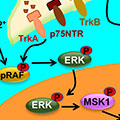
Methamphetamine addiction is a public health threat throughout the world. Investigators in Dr. Cadet’s laboratory in the intramural program have developed a rat model of methamphetamine addiction that includes one of the psychiatric criteria used to make that diagnosis in humans. In that model, they used footshocks to represent adverse consequences that are present during the clinical course of addiction. Contingent footshocks helped the investigators to identify some rats (addicted) that continue to press a lever to get methamphetamine whereas other rats (non-addicted) suppress or stop their taking of methamphetamine in the presence of these adverse consequences…
Cannabinoid disruption of learning mechanisms involved in reward processing
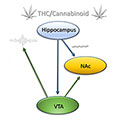
Reviews To Read – August 28, 2018. The increasing use of marijuana, its derivatives, and synthetic cannabinoids for medicinal and recreational purposes has increased interest in understanding the addictive potential of this class of molecules. Studies show that nearly 1 in 10 marijuana users will eventually show signs of dependence on the drug, which is… [Read More]
