


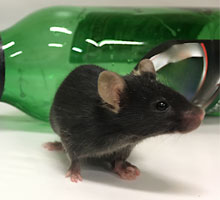

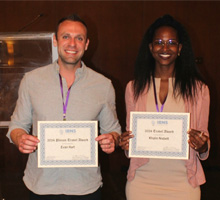

Congratulations to the NIDA labs who participated and received awards in the 2023 NIH Green Labs Program! Molecular Neuropsychiatry Section, Adjei, Nasser – Gold Translational Analytical Core, Kryszak, Lindsay – Silver Neuronal Circuits and Behavior Section, Sarsfield, Sarah – Silver Integrative Neuroscience Research Branch, Neuronal Networks Section, Barbano, Flavia – Bronze Molecular Targets and Medications… [Read More]

Hot Off the Press
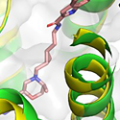
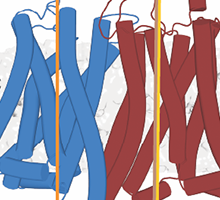
A bitopic agonist bound to the dopamine 3 receptor reveals a selectivity site.
Hot Off the Press – October 15, 2024 Published in Nature Communications with contributions from Alessandro Bonifazi , Francisco Battiti and Amy Hauck Newman of the NIDA IRP Medicinal Chemistry Section. Summary We have been designing bitopic ligands for more than two decades with the idea that the secondary pharmacophore would bind in a site… [Read More]
Reviews To Read

Controversies in Assessment, Diagnosis, and Treatment of Kratom Use Disorder.
Reviews To Read – August 2024. Published in Current Psychiatry Reports by Kirsten Smith, David Epstein & Stephanie Weiss of the NIDA IRP Translational Addiction Medicine Branch. This publication arose because Dr. Weiss was asked to write about “kratom misuse” for a kratom-focused issue of Current Psychiatry Reports. She agreed to contribute, but with a change… [Read More]
Featured Papers

A novel atypical DAT inhibitor that inhibits cocaine taking and seeking and itself has low abuse potential in experimental animals.
Featured Paper of the Month – December 2025
Published in Translational Psychiatry by Omar Soler-Cedeño and Zheng-Xiong Xi, M.D., Ph.D. of the NIDA IRP Addiction Biology Unit.
This study evaluated two new compounds in animal models: RDS-04-010, an atypical dopamine transporter (DAT) inhibitor that binds to an inward-facing conformation of DAT, and RDS-03-094, a more typical DAT inhibitor that binds to an outward-facing conformation. Notably, RDS-04-010 reduced cocaine use, lowered motivation to seek cocaine, and prevented relapse-like behavior, while showing no rewarding or addictive effects on its own. These findings highlight RDS-04-010 as a promising treatment candidate.