Cocaine chemogenetics blunts drug-seeking by synthetic physiology.
Published in Nature.
Authors
Juan L Gomez, Christopher J Magnus, Jordi Bonaventura, Oscar Solis, Fallon P Curry, Marjorie R Levinstein, Reece C Budinich, Meghan L Carlton, Emilya N Ventriglia, Sherry Lam, Le Wang, Ingrid Schoenborn, William Dunne, Michael Michaelides, Scott M Sternson
Paper presented by Oscar Solis Castrejon, Ph.d. and selected by the NIDA TDI Paper of the Month Committee
Publication Brief Description
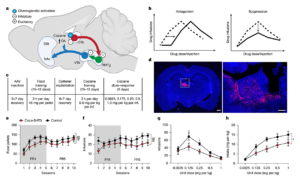
This study introduces a novel chemogenetic approach where cocaine itself acts as a molecular key to activate engineered receptors. This allows for specific closed-loop control of brain circuits during cocaine exposure. It addresses a key limitation in addiction research, which is the lack of tools to modulate drug-induced activity in a selective way. The authors engineered cocaine-gated ion channels that act as specialized switches that only respond when cocaine is present. When expressed in the lateral habenula, a brain region associated with motivation, activation during cocaine exposure reduced cocaine self-administration without affecting natural reward behaviors. This technique of drug-gated chemogenetics offers a highly precise method to study and potentially treat addiction by targeting only the circuits activated by the drug, leaving the rest of the brain’s natural functions untouched.
Cocaine chemogenetics blunts drug-seeking by synthetic physiology Journal Article
In: Nature, vol. 646, no. 8085, pp. 746–753, 2025, ISSN: 1476-4687.
