About the CCB Graduate Student Fellowship
The Center on Compulsive Behaviors (CCB) is delighted to host the CCB Graduate Student Fellowship, designed to support outstanding graduate students enrolled in the NIH Graduate Partnership Programs (GPP) who are passionate about research related to compulsive behaviors. This fellowship aims to provide financial assistance, mentorship, and opportunities for professional development.
Fellowship Contacts
To stay up to date with the application cycle, sign up for the listserv or send an email with a signup request to Roland Bock.
Yavin Shaham, Ph.D.
Senior Investigator, NIDA
yshaham@mail.nih.gov
Lauren Atlas, Ph.D.
Investigator, NCCIH
lauren.atlas@nih.gov
Roland Bock, M.Sc.
Scientific Program Manager
roland.bock@nih.gov
Applications for Fellowship
Applications for the current cycle are currently closed. Please reach out to the fellowship contacts for more details.
First Year Fellows
Laura Castillo (NEI)
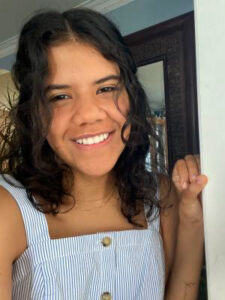 Laura is a PhD student in an individual partnership between NIH and the University of Maryland – College Park. At NIH, she is a part of the Visual Decision-Making Section in the Laboratory of Sensorimotor Research (NEI) and is advised by Dr. Hendrikje Nienborg. Her CCB project investigates differences in central and peripheral visual field processing in non-human primates.
Laura completed her B.A. in Neuroscience at Middlebury College. She then completed a post-baccalaureate IRTA fellowship with Dr. Andrew Holmes (NIAAA) where she studied endocannabinoid mediated fear extinction. Outside of lab, Laura enjoys watching old movies, running, reading, and playing fetch with her dog.
Ben Filio (NINDS)
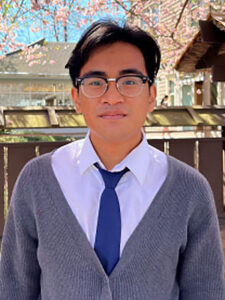 Ben is a Ph.D. candidate in the Brown University – NIH Graduate Partnership Program conducting his doctoral research in the lab of Dr. Mark Wagner (NINDS). His CCB project combines in vivo 2-photon imaging and ex vivo tissue clearing and immunostaining to characterize how reward signals in the cerebellum are organized.
Ben completed his undergraduate studies at Wesleyan University in Middletown, CT where he conducted research under Dr. Gloster Aaron studying the role of adult neurogenesis in zebra finch song behavior. In his free time, Ben is heavily involved in the DMV area hip hop dance scene.
Emilya Ventriglia (NIMH)
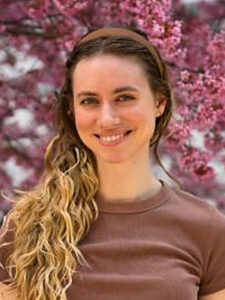 Emilya is a PhD student in the Brown University graduate partnership program mentored by Dr. Hugo Tejeda. Her research explores how the endogenous opioid system in the medial prefrontal cortex (mPFC) regulates behavioral flexibility during stress and conflict. Within this, she seeks to understand how ketamine’s dual action as an opioid receptor agonist and NMDA receptor antagonist may engage these mPFC circuits to relieve maladaptive avoidance in models of stress-related disorders.
She has built a focus within the area of opioids, beginning with studies of opioid-induced hyperalgesia during her Master’s at UC San Diego, followed by post-master’s work on opioid abuse liability at the National Institutes on Drug Abuse. Beyond the bench, Emilya is a labor organizer, amateur photographer, and avid reader.
Second Year Fellows
Hannah Goldbach (NIMH/NEI)
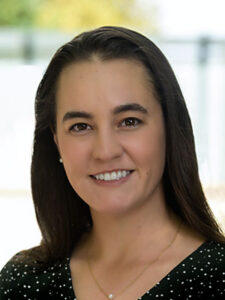 As a Ph.D. student in the Brown University – NIH Graduate Partnership Program, Hannah is completing her doctoral research in the labs of Dr. Veronica Alvarez (NIMH) and Dr. Richard Krauzlis (NEI). Her research combines ex vivo slice physiology methods with modern in vivo methods to explore the temporal and spatial development of striatal dopamine signals during visual learning, as well as the pathways through which these signals are generated.
Hannah completed her B.S. in Neuroscience at American University, in Washington, DC. She then completed a Post-Baccalaureate IRTA Fellowship with Dr. Mark Histed (NIMH) before beginning her Ph.D. As a post-bac, Hannah studied the contributions of mouse secondary visual areas to basic visual
Sofia Shirley (NIMH)
 Sofia is a PhD student in the Johns Hopkins graduate partnership program co-mentored by Dr. Hugo Tejeda and Dr. Mario Penzo. Her research focuses on endogenous opioid signaling within the paraventricular nucleus of the thalamus and uses a combination of electrophysiological and behavioral techniques to investigate the cellular and circuit mechanisms of this opioid signaling and the behaviors it modulates.
Sofia completed her undergraduate studies at the University of Washington where she performed research under Dr. Michael Bruchas studying kappa opioid receptor modulation of action-outcome behaviors in the dorsal striatum. In her free time, Sofia likes playing soccer, hiking, and traveling.
Lacey Greer (NIDA)
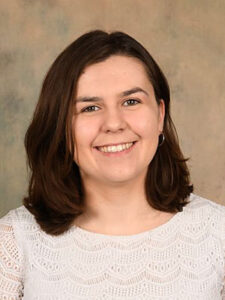 Lacey is a predoctoral fellow in the Cellular Stress and Inflammation Section led by Dr. Brandon Harvey at the National Institute on Drug Abuse. Lacey’s research interests include understanding the role of the ER/Golgi protein, KDEL receptor, in trafficking the dopamine transporter and its overall impact on dopaminergic neuron function. Her CCB project will combine molecular techniques with voltammetry to understand how altering KDEL receptors change dopamine transporter surface expression and dopamine signaling with and without the presence of amphetamines.
Lacey received her B.S. in Biology and Psychology from the University of Alabama. After graduation, she worked under the guidance of Dr. Brandon Harvey as a postbaccalaureate fellow at NIDA, studying isoform specific differences in KDEL receptors. She attends graduate school at the University of Maryland Baltimore, Program in Neuroscience and has continued in the Harvey lab for her dissertation work. Outside the lab, she enjoys rock climbing and spending time with friends.
Anna Vlachos (NICHD)
Anna is a CCB graduate student fellow in the NIH-Brown GPP and is pursuing her PhD in the lab of Dr. Chris McBain (NICHD). Her project focuses on the cross-species characterization of a septal-projecting hippocampal inhibitory interneuron subtype and its role in network rhythms across the septo-hippocampal axis that underlie processes such as learning, memory, fear, and anxiety.
Anna received her BS in Neuroscience from American University where she trained in the psychopharmacology lab of Dr. Anthony Riley studying the aversive effects of synthetic cathinones in rats. Following the completion of her undergraduate degree, she took a postbac position in the lab of Dr. Chris McBain, studying inhibitory interneurons and their role in orchestrating network rhythms in the hippocampus across species.
